
Vape Nicotine Strength Calculator: What Strength Do I Need?
29th Jul 2026
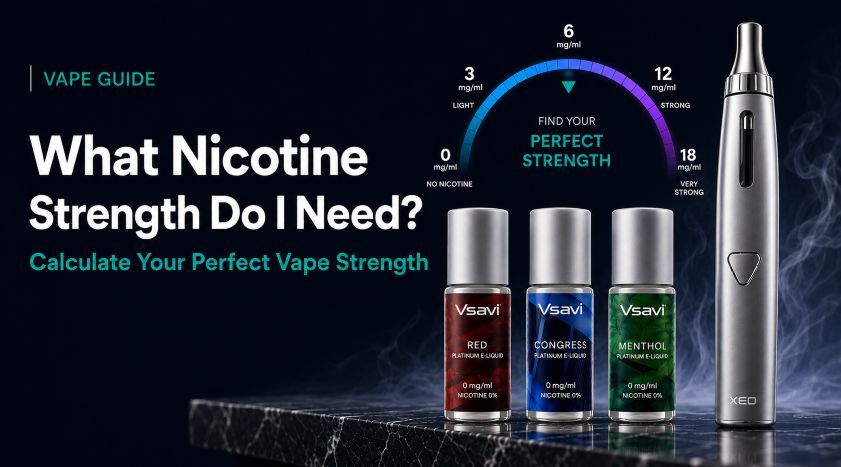
Our advice would be to match your nicotine strength to how much you actually smoke, not to whatever a friend or a forum thread recommends.
As a rough starting point: under 10 cigarettes a day usually points to 3-6mg, 10 to 15 a day to around 10-12mg, 15 to 20 a day to 12-18mg, and 20 or more a day to 18-20mg, ideally as a nicotine salt. Getting this band right in the first week is one of the biggest single factors in whether switching actually sticks.
By Joe Delaney; Director and Content Writer, V2 Cigs UK.
Originally Published: 29th July 2026.
Last updated: 13th October 2026.
Vaping products are for adult smokers and existing vapers only. Vaping is not risk-free. Not suitable for non-smokers or anyone under 18.
At V2 UK, the question our team hears most from a cigarette smoker placing their first order isn't which kit to pick. It's “what strength do I need?” - and it's usually asked with more hesitation than the device question ever gets.
That's fair. Cigarette packets don't translate neatly into a number on an e-liquid bottle, and guessing wrong in either direction is one of the most common reasons a first attempt at switching doesn't take.
Why Nicotine Strength Matters More Than the Device You Pick
A lot of first-time attention goes on choosing a device - cigalike, pod kit, or something bigger - and comparatively little goes on the liquid inside it. That's the wrong way round for most smokers switching for the first time. The NHS is clear that finding the right device and nicotine strength can take some trial and error, and that you shouldn't worry if you find yourself vaping more than you used to smoke while you settle in. If you’re still getting used to the device itself, our guide on how to vape properly covers inhaling, MTL and DTL, and setting up your first kit.
Get the strength too low and cravings persist, which is when people either give up on vaping or start topping up with cigarettes alongside it. Get it too high and the throat hit can be harsh enough that the whole experience feels unpleasant rather than like a replacement worth sticking with. Neither outcome is really about the device. Both come down to the number on the bottle.
How Many Do You Smoke a Day? Match Your Band
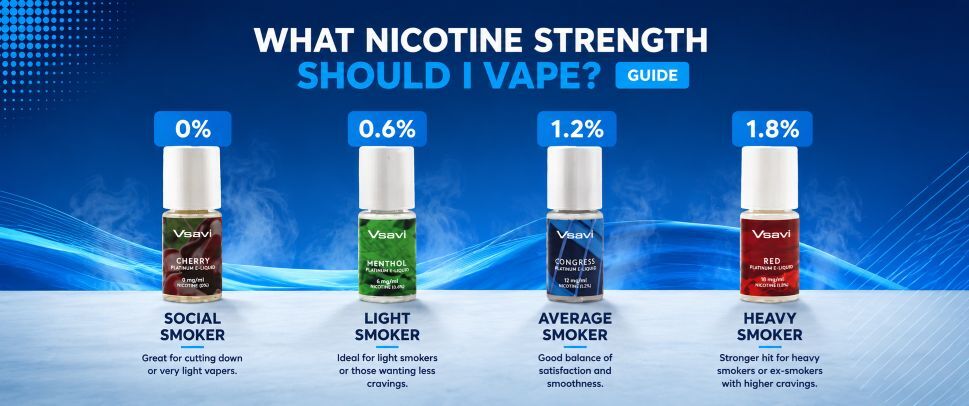
These bands are a starting point, not a fixed prescription - some people need to adjust up or down once they've tried a strength for a few days. As a general guide:
- Social smoker, fewer than 10 a day: Start around 3-6mg. If cigarettes are more of a social habit than a daily dependency - the odd one on a night out, one at lunch - a lower strength is usually enough to take the edge off without overwhelming you, and it's an easy strength to step down from once vaping feels established.
- Light-to-moderate smoker, 10-15 a day: Start around 10-12mg. This is the most common starting point for people switching from a regular smoking habit, and it tends to sit comfortably in both nic salt and freebase formats.
- Heavy smoker, 15-20 a day: Start around 12-18mg, leaning towards the higher end if cigarettes are the first thing you reach for in the morning.
- Very heavy smoker, 20 or more a day: Start around 18-20mg. At this level, nicotine salts are generally the more comfortable choice, since they deliver higher concentrations more smoothly than freebase nicotine. To match a genuine pack-a-day habit, expect to vape considerably more often than you smoked - roughly 15-20 times a day with several puffs each time isn't unusual in the first few weeks, and that's normal rather than a sign something's wrong.
If you smoke within the first five minutes of waking up, that's usually a sign of stronger dependence, and it's worth starting at the upper end of your band rather than the lower end. It's also worth knowing that nicotine from a vape tends to reach your system slightly more slowly than from a cigarette, so give it a little longer than you're used to before deciding a puff “hasn't worked.”
Prefer to just enter your numbers? Use the calculator below for a quick, personalised starting point.
Nicotine Salts vs Freebase: Why the Liquid Type Changes the Number
The same number on the label can feel completely different depending on the nicotine type. Freebase nicotine - the traditional form used in most e-liquids - has a higher pH, which produces a stronger throat hit at higher strengths. That's part of why freebase liquids are usually sold at lower strengths for use in higher-power devices, where a smoother, higher-volume vapour is the goal.
Nicotine salts are formulated to feel smoother at higher strengths, which is why they're the more common choice for cigalike cartridges and MTL pod kits aimed at smokers who want a strength close to what a cigarette delivers, without the harshness. If you're a heavier smoker and freebase liquid at a comparable strength feels too rough on the throat, a nicotine salt at the same mg is worth trying before assuming vaping “isn't for you.”
What Does 2% Nicotine Mean in mg? Labels Explained
UK e-liquid bottles are almost always labelled in mg/ml - the figure this guide uses throughout. Disposables and many products sold outside the UK are more often labelled as a percentage instead, which is where most of the label confusion comes from. The conversion is simple: multiply the percentage by 10 to get mg/ml. So 2% is 20mg/ml, and 5% is 50mg/ml.
That second figure matters for a specific reason: 50mg/ml is more than double the UK's legal maximum of 20mg/ml. If you see a “5%” disposable or e-liquid for sale, it isn't compliant with UK regulations - a UK-legal product will be labelled 20mg or 2% at the very most. This is one of the most common points of confusion for anyone comparing UK products against ones bought abroad or online from non-UK sellers. It's also worth knowing that single-use disposable vapes have been banned from sale in the UK since 1 June 2025, so a disposable on sale here now is itself a warning sign.
The mg/ml figure is a concentration, not a total - to work out the total nicotine in a bottle or disposable, multiply the strength by the volume. A 10ml bottle at 18mg/ml contains 180mg of nicotine in total; a 2ml pod at 20mg/ml contains 40mg. Neither figure translates directly into “equivalent cigarettes,” since a cigarette's nicotine yield (commonly cited around 1-1.5mg actually absorbed, out of roughly 10-12mg present in the tobacco) is absorbed very differently to inhaled vapour - useful for context, but not a like-for-like conversion.
What Happens If You Start Too Low or Too High?
Too low, and the most common pattern is persistent cravings that show up as reaching for a cigarette “just this once” alongside the vape - which tends to undermine the switch rather than support it. The NHS guidance here is clear: use your vape as much as you need to manage cravings, and don't worry if that means vaping more often than you used to smoke in the early days.
Too high, and the usual complaint is a harsh throat hit or a slight cough, particularly for anyone new to inhaling vapour rather than smoke. That can be discouraging enough that people put the device down after a day or two, concluding it wasn't a good fit when actually the strength was simply set too high for a first attempt.
Which Kit and Strength Combination Actually Works
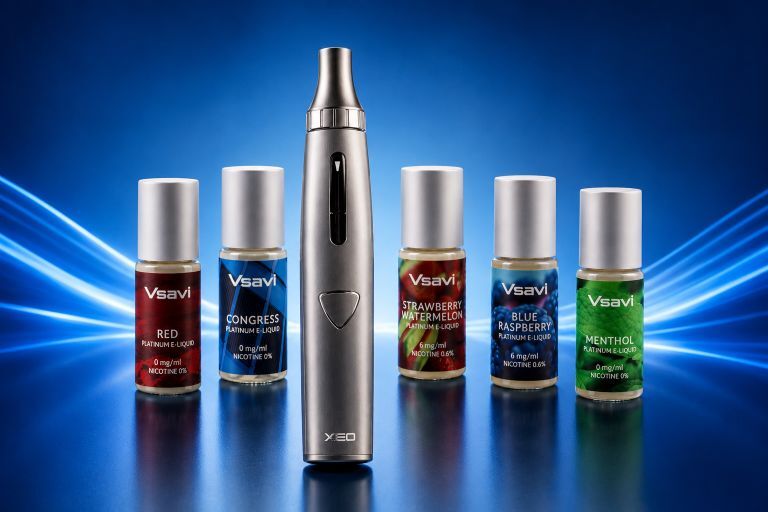 For most smokers taking their first step, a cigalike system is still the easiest place to start - no settings to fiddle with, no liquid decisions beyond picking the right strength, and a format that feels close to the hand-to-mouth habit of smoking.
We'd usually point people towards the Vsavi Classic Starter Kit, paired with prefilled flavour cartridges in whichever strength matches your band above. The XEO Void Vape Kit is another solid option if you'd rather have a refillable device from the start.
If you'd rather manage your own e-liquid from the start, V2 Platinum E-Liquid covers strengths up to 18mg across its tobacco and menthol flavours, so heavier smokers aren't forced into a weaker liquid than they need. For very heavy smokers who find freebase liquid too harsh at that strength, a nicotine salt such as Hayati Pro Max gives a smoother throat hit at a comparably high strength - worth trying before assuming the strength itself is the problem.
Whichever device you land on, the strength decision matters more than the device does. A well-matched cigalike beats a mismatched pod kit every time for someone in the first fortnight of switching.
What Does “Low Nicotine Vaping” Actually Mean?
It's a phrase that gets searched a lot, and there's no hidden trick to it - it simply means using an e-liquid at the lower end of the strength scale, typically 3mg or below, down to completely nicotine-free. It's the natural destination for two different groups: social smokers who never had much of a nicotine dependency to begin with, and established vapers who've been stepping down gradually from a higher strength and are close to finishing that process.
The one thing worth being careful about is dropping to a low strength too quickly if you were previously on a much higher one - going from 18mg straight to 3mg is more likely to bring withdrawal symptoms like irritability or renewed cravings back than a gradual step down would. Low nicotine vaping is a good goal; getting there in one jump usually isn't.
When (and How) to Step Your Strength Down
 Nicotine strength isn't meant to be permanent. Once vaping feels established as a routine and you're confident cigarettes aren't calling, NHS guidance suggests reducing strength gradually is one of the more comfortable ways to eventually cut down on nicotine altogether, rather than stopping in one step.
A typical approach is dropping one level at a time - say from 18mg to 12mg - and giving yourself a few weeks at each step before considering the next drop, adjusting your pace if cravings pick back up.
There's no fixed timetable for this. Some people are ready to step down within a couple of months of switching; others stay at their starting strength for a year or more, and that's a perfectly reasonable place to stay if it's keeping cigarettes out of the picture.
A Quick Reference: Cigarettes a Day to Starting Strength
- Fewer than 10 a day → 3-6mg
- 10 to 15 a day → 10-12mg
- 15 to 20 a day → 12-18mg
- 20 or more a day, or smoking within 5 minutes of waking → 18-20mg, nicotine salt preferred
Frequently Asked Questions
Compiled by the V2 UK Customer Service Team, based on questions they receive most often from ex-smoker customers.
What's the legal maximum nicotine strength for e-liquid in the UK?
20mg/ml. Under the Tobacco and Related Products Regulations 2016, no nicotine-containing e-liquid sold in the UK can exceed this strength, regardless of format.
Should I start higher than I think I need, just to be safe?
Not necessarily. Starting too high is just as likely to put you off vaping as starting too low, through a harsh throat hit. It's better to start within your matched band and move up only if cravings persist after a few days.
Are nicotine salts or freebase better for a first-time switcher?
Neither is universally “better” - it depends on your strength band. Heavier smokers starting at 18-20mg usually find nic salts more comfortable. Lighter smokers on lower strengths often get on fine with either.
Can I change my nicotine strength later?
Yes, and most people do. It's normal to start at one strength, settle in for a few weeks, and then move up or down once you know how your body responds.
Will a lower nicotine strength still stop me craving cigarettes if I smoke heavily?
It's less likely to on its own. Heavier smokers generally need a higher starting strength to manage withdrawal symptoms in the early days - the NHS notes that finding the right strength can take some experimentation, and there's no harm in vaping more often than you smoked if it keeps cravings under control.
How do I convert nicotine percentage to mg/ml?
Multiply the percentage by 10. A 2% e-liquid is 20mg/ml, and a 5% e-liquid is 50mg/ml. UK bottles are almost always labelled in mg/ml already; this conversion mostly comes up when comparing against disposables or products bought outside the UK.
How much nicotine is in a cigarette compared to a vape?
A cigarette contains roughly 10-12mg of nicotine in the tobacco - smoked over around 8-10 puffs, but the body typically only absorbs around 1-1.5mg of it per cigarette. A vape's mg/ml figure is a concentration in the liquid, not an absorbed dose, so there's no exact like-for-like conversion - it's more useful as general context than a calculation to rely on.
Do I need a lower nicotine strength for a sub-ohm device?
Yes, generally. Sub-ohm devices produce far more vapour per puff than a cigalike or MTL pod kit, which makes the same nicotine strength feel considerably stronger - so it's worth starting a strength or two lower than you would on a smaller device, then adjusting from there. You can also mix e-liquids in your tank to fine-tune both flavour (a Platinum Red Tobacco and Menthol blend, for example) and strength, which lets you step down in smaller increments than the standard mg jumps allow.
What's the difference between a 2% and a 5% disposable vape?
5% (50mg/ml) is double the strength of 2% (20mg/ml) - and also double the UK's legal maximum of 20mg/ml. Any “5%” disposable being sold in the UK isn't compliant with UK regulations, so it's worth treating that labelling as a red flag on where the product actually came from. Single-use disposables have also been banned from sale in the UK since 1 June 2025.
Can I mix e-liquids of different nicotine strengths?
Yes. Mixing a higher and lower strength of the same liquid, or compatible liquids, gives you something in between, which some people use deliberately as a gentler way to step down. To work out the final strength, multiply each liquid's strength by its volume, add the two together and divide by the total volume. For example, 10ml at 18mg plus 10ml at 6mg gives (180 + 60) ÷ 20 = 12mg/ml. Just be aware you're also mixing flavour and PG/VG ratio, not only strength, so results vary by liquid.
Is an 18mg nicotine salt stronger than an 18mg freebase liquid?
The total nicotine content is identical - 18mg/ml either way. What differs is how it feels: nicotine salts are absorbed faster and feel smoother at that strength, so many people describe them as feeling “stronger” in effect even though the mg figure on the bottle is the same.
Useful Guides Related to This Topic
- How to Vape Properly: A Beginner's Guide to Using a Vape
- Does Vaping Make You Lose Weight? What Nicotine Really Does
- Why Is My Throat Sore After Vaping?
- What Is In the Vapour Produced by E-Cigarettes?
- Common Vaping Questions: The FAQ Hub
About the Author
 Joe Delaney looks after the day to day running of V2 Cigs UK and writes its blogs.
When the blog recommends a device, he has used it - and for a leak test that means actually filling kits and trying to make them fail, pocket-carrying them and leaving them upside down overnight, rather than repeating manufacturer claims.
Health, safety and regulatory points are checked against named UK authorities such as the NHS and MHRA, and a product is only ever called "less harmful than smoking" where a UK authority says so. More about how he works, and the family story behind V2, is on Joe's author profile.
Sources
- NHS - Vaping to Quit Smoking
- NHS - How to Quit Vaping (Gradual Nicotine Reduction)
- GOV.UK - E-cigarette regulations for consumer products (20mg/ml legal cap)
Vaping products are for adult smokers and existing vapers only. Vaping is not risk-free. Not suitable for non-smokers or anyone under 18.
Last updated: 13th October 2026.