
Sore Throat From Vaping? 8 Causes and How to Fix Them
25th Jan 2023
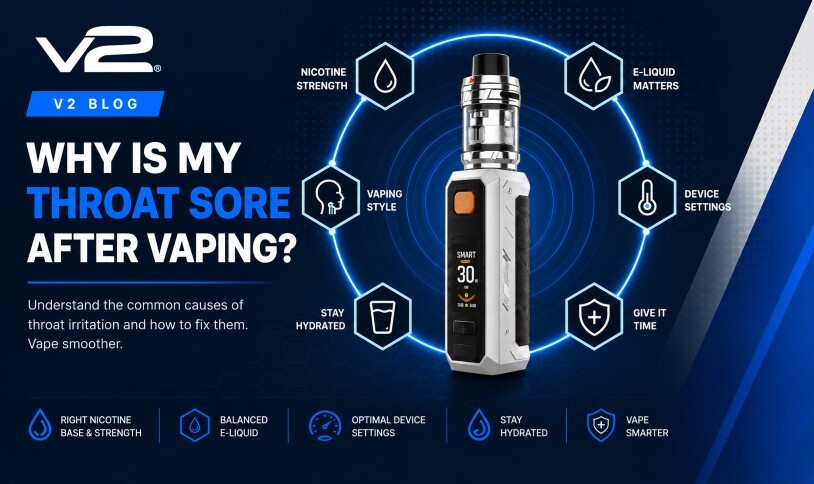
A sore throat when vaping almost always comes down to one of a handful of things: nicotine withdrawal in the first few days, a nicotine base that doesn't suit you, too much PG in your e-liquid, a nicotine strength that's mismatched to how you smoked, dehydration, wattage set too high for your coil, a vaping style that doesn't suit your liquid, or simply being new to vaping.
None of them are permanent, and most are a quick e-liquid or setting change away from being fixed.
By Joe Delaney; Director and Content Writer, V2 Cigs UK.
Originally Published: 25th January 2023.
Last updated: 14th October 2026.
Vaping products are for adult smokers and existing vapers only. Vaping is not risk-free. Not suitable for non-smokers or anyone under 18.
Just Switched From Smoking? It Might Be Withdrawal, Not the Vape
The first few days after quitting cigarettes can bring a scratchy, dry throat regardless of how you're getting your nicotine. The NHS lists a dry mouth and throat, and mouth and throat irritation, among the common side effects of vaping, and suggests getting advice from a stop smoking adviser or specialist vape retailer if they don't settle, rather than giving up on vaping straight away.
Smoking coats the lungs and airways in tar and dulls the cilia that clear debris out of them, and those symptoms typically settle within a few days to a couple of weeks as that recovery process reverses.
Freebase or Nic Salt: Have You Got the Right Nicotine Base?
E-liquids use one of two nicotine bases. Freebase nicotine has a higher pH and gives a sharper, more scratchy throat hit, closer to a cigarette. Nic salts are buffered with benzoic acid to lower that pH, which is why they feel noticeably smoother even at the same strength. If freebase is catching your throat, switching to a nic salt at a matched strength is usually the simplest fix, and most vapers settle on 10mg or 20mg salts for that reason.
High-PG E-Liquid Can Dry Your Throat Out
PG (propylene glycol) actively draws in moisture, and a high-PG e-liquid will pull it from your throat as well as the air around it, leaving that dry, scratchy feeling behind. Our PG vs VG guide covers the ratio in more depth, but the short version is: if you're getting a sore throat on a high-PG or 50/50 liquid, a lower-PG, higher-VG e-liquid will usually feel gentler, though it's worth experimenting to find the ratio that suits you.
Nicotine Strength Too High or Too Low?
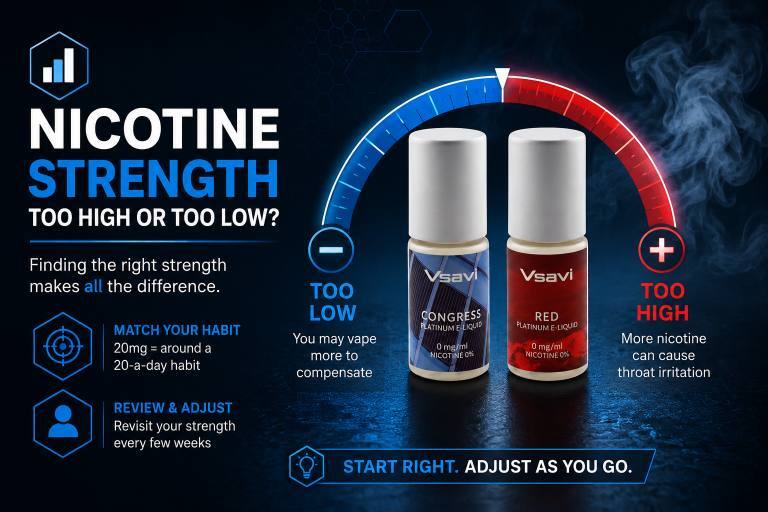
A strength that's badly mismatched to how much you used to smoke can irritate the throat in both directions. Too high, and the extra nicotine itself can be harsh. Too low, and you may end up vaping more often or more heavily to compensate, which has the same effect.
As a rough starting point, a 20mg e-liquid is roughly in line with a 20-a-day habit, while lighter smokers usually do better starting at 3-6mg, or 10-12mg at 10 to 15 a day. Our nicotine strength calculator gives you a personalised starting point.
It's worth reviewing your strength every few weeks as your habit settles rather than sticking with your first guess indefinitely.
Dehydration Makes Every Other Cause Worse
PG binds water, so vaping regularly without drinking enough alongside it will dry your throat out faster than any single setting change. Keeping water on hand and sipping between vapes is a small habit that meaningfully reduces how sore your throat feels by the end of the day, on top of whatever else is causing it.
Why Does My Vape Burn My Throat? Check Your Wattage and Coil
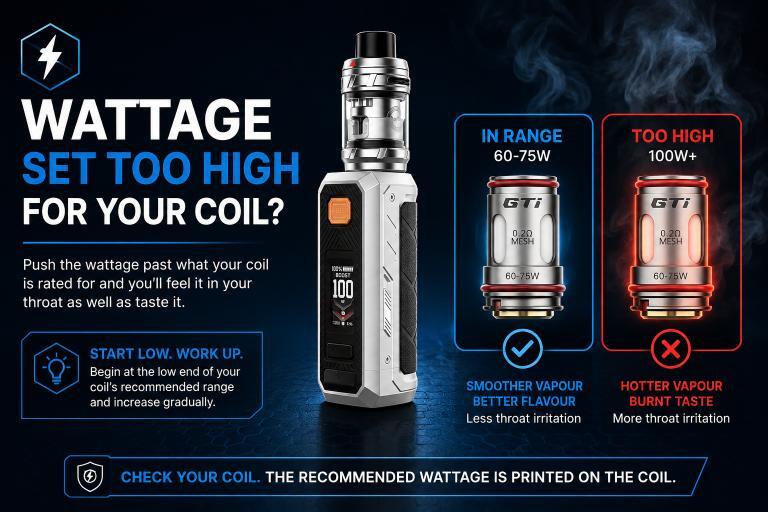
Push the wattage past what your coil is rated for and you'll feel it in your throat as well as taste it: an overheated coil produces a harsher, hotter vapour that irritates rather than soothes. The recommended range is usually printed on the coil itself. If you're not sure where to start, begin at the lower end and work up gradually.
A brand-new coil that wasn't primed properly can also give a harsh, burning hit on the first few puffs. Our guide to why a vape tastes burnt covers priming and the other causes in more detail.
MTL or DTL: Is Your Vaping Style Working Against You?
Mouth-to-lung (MTL) vaping, where vapour sits briefly in the mouth before you inhale, mimics a cigarette draw and usually pairs better with a stronger nic salt. Direct-to-lung vaping, where you inhale straight into the lungs, tends to feel smoother at lower nicotine strengths and higher power.
Using a high-strength e-liquid on a sub-ohm DTL setup, especially a nic salt, is a common mismatch that shows up as throat irritation.
New to Vaping? Give It a Little Time
If you've only just switched, some throat sensitivity while your body adjusts to the sensation of inhaling vapour rather than smoke is normal and usually settles within a week or two. Taking slower, longer draws rather than vaping the way you smoked, and building in short breaks, both help.
When to See a Doctor
If a sore throat persists well beyond a couple of weeks despite working through the causes above, or comes with other symptoms that concern you, it's worth speaking to a GP or pharmacist rather than continuing to troubleshoot it yourself. Coughing linked to vaping specifically is covered in our guide on why vaping can make you cough.
If none of this matches what you're seeing, our full troubleshooting guide covers the rest of the common vaping problems we hear about most.
Frequently Asked Questions
Is a sore throat a sign vaping isn't working for me? Not usually. It's most often one of the causes above (nicotine base, PG level, strength or wattage), all of which are adjustable. A persistent sore throat that doesn't respond to any of these changes is worth mentioning to a pharmacist or GP.
Will switching to nic salts definitely fix a sore throat? Not for everyone, but it resolves it for a lot of vapers, because nic salts are formulated at a lower pH than freebase nicotine, which is what causes the sharper throat hit in the first place.
How long does a sore throat from switching to vaping usually last? Withdrawal-related soreness from quitting smoking typically settles within a few days to two weeks. If it's caused by your e-liquid or device setup instead, it can persist indefinitely until you change what's causing it.
Can drinking more water actually help? Yes. PG in e-liquid binds water, so staying hydrated directly offsets the drying effect and reduces throat irritation on top of whatever else is causing it.
Useful Guides Related to This Topic
- Why Does My Vape Taste Burnt? 8 Causes and Quick Fixes
- Vape Nicotine Strength Calculator: What Strength Do I Need?
- How to Vape Properly: A Beginner's Guide to Using a Vape
- Vaper's Tongue and Vaper's Cough: What They Are and How to Fix Them
- Common Vaping Questions: The FAQ Hub
About the Author
 Joe Delaney looks after the day to day running of V2 Cigs UK and writes its blogs.
When the blog recommends a device, he has used it - and for a leak test that means actually filling kits and trying to make them fail, pocket-carrying them and leaving them upside down overnight, rather than repeating manufacturer claims.
Health, safety and regulatory points are checked against named UK authorities such as the NHS and MHRA, and a product is only ever called "less harmful than smoking" where a UK authority says so. More about how he works, and the family story behind V2, is on Joe's author profile.
Sources
Vaping products are for adult smokers and existing vapers only. Vaping is not risk-free. Not suitable for non-smokers or anyone under 18.
Last updated: 14th October 2026.