
UK Vape Tax 2026 Is Live: What £2.20 per 10ml Means for You
7th Apr 2026
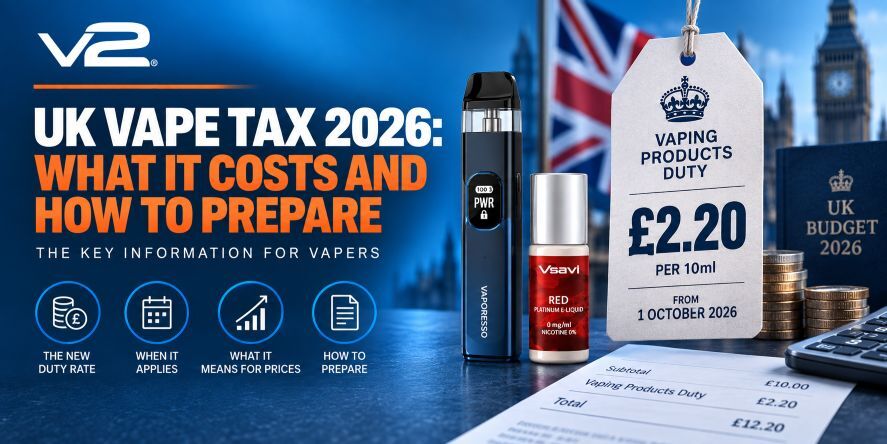
The UK vape tax started on 1 October 2026. Officially called Vaping Products Duty (VPD), it adds two pounds twenty per 10ml to every e-liquid, which comes to two pounds sixty-four on a 10ml bottle once 20% VAT is added.
It's the first excise duty the UK has ever put on vaping products, and it applies to all e-liquids regardless of nicotine strength, including 0mg.
Shops can keep selling unstamped stock made or imported before 1 October until 31 March 2027, so you may still see some pre-duty stock on shelves until then. Here's what the tax adds to each product and how to keep your costs down.
By Joe Delaney; Director and Content Writer, V2 Cigs UK.
Originally Published: 7th April 2026.
Last updated: 1st October 2026.
Vaping products are for adult smokers and existing vapers only. Vaping is not risk-free. Not suitable for non-smokers or anyone under 18.
How Much Does the UK Vape Tax Add to Prices?
- V2 Cigalike Cartridges (0.9ml per cartridge): about 20p in duty per cartridge, or 24p with VAT. Noticeable over time, but manageable.
- 10ml nic salt or freebase bottles: £2.20 duty plus VAT (£2.64 in total) takes a bottle that cost around £3-£4 before the duty closer to £5-£6.
- 100ml shortfills: £22 in duty alone, or £26.40 with VAT. A bottle that cost £10-£15 before the duty can more than double in price.
The pattern is clear - the more liquid in the product, the harder it gets hit. Shortfill users feel this the most. Pod and cigalike users see smaller per-unit increases, though they still add up over weeks and months.
The government has also raised tobacco duty by £2.20 per 100 cigarettes alongside this change. The stated aim is to keep vaping significantly cheaper than smoking even after the tax, and by the government's figures it is still more than three times cheaper.
Loading vape tax calculator...
What About Duty Stamps?
Vaping products released onto the UK market from 1 October 2026 must carry an official vaping duty stamp on the retail packaging. These are security labels, similar to the ones you see on spirits, that show the duty has been paid.
Stock that was made or imported before 1 October doesn't need a stamp yet, and shops can keep selling it until 31 March 2027. From 1 April 2027, every vaping product on sale in the UK must be stamped. An unstamped product after that date is non-compliant, so buying one carries risk.
This is relevant for consumers because it gives you a simple way to verify that what you're buying is legitimate and duty-paid. It's also another reason to buy from established UK retailers rather than chasing suspiciously cheap deals elsewhere.
For the wider regulatory picture beyond this one duty, our guide to understanding UK vaping laws and regulations covers everything else that's changed.
Which Products Are Hit Hardest?
The tax is volume-based, so products containing more e-liquid carry more duty. In practical terms:
Shortfills take the biggest hit. These have always been popular because they offer strong value per millilitre, but a £22 duty on a 100ml bottle fundamentally changes the economics. Shortfills will still exist, but the price advantage over smaller bottles shrinks considerably.
10ml bottles (nic salts and freebase) see a meaningful but less dramatic increase. At £2.20 per bottle in duty, they remain the most predictable and manageable format for budgeting your vaping costs.
Prefilled pods and cartridges containing small volumes of liquid - like V2 Cigalike Cartridges - see the smallest per-unit increase. For vapers who already use low-consumption devices, the monthly impact is relatively contained.
Hardware isn't taxed. The duty applies only to e-liquid, not to devices, coils, or empty pods. Your kit itself won't cost more because of this change.
How to Keep Your Vaping Costs Down
There's no way around the price increase, but there are sensible ways to manage it:
Switch to a refillable device if you haven't already. Refillable systems give you more control over liquid consumption and cost per ml. A refillable pod kit paired with 10ml bottles is likely to be the most cost-effective setup now the duty is in place.
Consider a higher nicotine strength. If you're using 10mg liquid and getting through a bottle a day, moving to 20mg and vaping half as much achieves the same nicotine intake at half the liquid cost. It's a simple adjustment that could save you several pounds a week.
Use an efficient device. Lower-powered mouth-to-lung kits use significantly less liquid than high-wattage sub-ohm setups. If you're currently running through large volumes of shortfill, a switch to a tighter, more efficient draw could cut your consumption substantially.
Compare cost per ml, not bottle price. Because the duty is charged per 10ml, it adds the same 22p to every millilitre whatever the bottle size, so the cheapest formats per ml see the biggest percentage rise. Use the calculator above to check your usual order, then browse the full e-liquid range to compare formats.
Frequently Asked Questions
When does the UK vape tax start? Vaping Products Duty started on 1 October 2026. E-liquids made or imported from that date carry the duty, and shops can sell older, unstamped stock until 31 March 2027.
How much is the vape tax per bottle? The duty is £2.20 per 10ml of e-liquid, plus 20% VAT on the duty. That adds £2.64 to a 10ml bottle and £26.40 to a 100ml shortfill. It applies regardless of nicotine content.
Are nicotine-free e-liquids exempt from the tax? No. The duty applies to all e-liquids, including 0mg nicotine-free products. Switching to nicotine-free liquid won't avoid the tax.
Can shops still sell vapes without a duty stamp? Yes, until 31 March 2027, as long as the stock was made or imported before 1 October 2026. From 1 April 2027, shops must not sell any unstamped vaping products.
Will vaping still be cheaper than smoking after the tax? Yes. The government raised tobacco duty alongside the vape tax specifically to maintain a price gap. According to the government's own Vaping Products Duty guidance, vaping remains more than three times cheaper than smoking with both increases in place.
Are vape devices taxed too? No. The duty applies only to e-liquid. Devices, coils, pods (when empty), and accessories are not affected by Vaping Products Duty.
For the full official details, see the UK Government's Vaping Products Duty guidance on GOV.UK.
Vaping Knowledge Centre
- Understanding UK Vaping Laws and Regulations - The full picture on UK vaping law, from nicotine strength to product notification.
- What Vapes Can I Use After the UK Disposable Vape Ban? - What's still legal, and how to switch flavours to a refillable format.
- The £2.20 Vape Tax: Inside the Industry's Case Against the Rate - What the industry is arguing about the rate itself, straight from the UKVIA Forum.
- UK Vape Tax: Is It Actually Happening? Our Predictions - Our earlier coverage from before the rate was confirmed.
- UK Vaping Regulation: We've Been Here Before - How past regulatory changes played out, and what that suggests about this one.
Sources
- GOV.UK - Introduction of Vaping Products Duty from 1 October 2026
- HMRC / GOV.UK - Preparing for Vaping Products Duty and the Vaping Duty Stamps Scheme
- GOV.UK - Handling wholesale or retail vaping products in the UK
About the Author

Joe Delaney looks after the day-to-day running of V2 Cigs UK and writes its blogs.
When the blog recommends a device, he has used it - and for a leak test that means actually filling kits and trying to make them fail, pocket-carrying them and leaving them upside down overnight, rather than repeating manufacturer claims.
Health, safety and regulatory points are checked against named UK authorities such as the NHS and MHRA, and a product is only ever called "less harmful than smoking" where a UK authority says so. More about how he works, and the family story behind V2, is on Joe's author profile.
Vaping products are for adult smokers and existing vapers only. Vaping is not risk-free. Not suitable for non-smokers or anyone under 18.
Last updated: 1st October 2026.