
Vape Tax vs the Disposable Ban: Have We Been Here Before?
7th May 2026
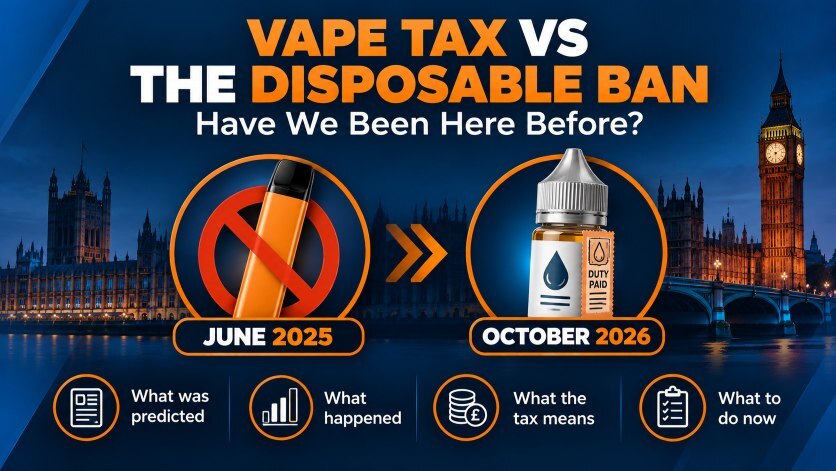
The Vaping Products Duty started on 1 October 2026, adding two pounds twenty for every 10ml of e-liquid sold in the UK. We have been somewhere like this before. Ahead of the disposable ban in June 2025, the forecasts were just as bleak, and most vapers adapted by moving to refillable pod kits rather than going back to cigarettes. The ban also fed an illegal market that is still growing, and both lessons apply to the tax.
By Joe Delaney; Director and Content Writer, V2 Cigs UK.
Originally Published: 7th May 2026.
Last updated: 8th October 2026.
Vaping products are for adult smokers and existing vapers only. Vaping is not risk-free. Not suitable for non-smokers or anyone under 18.
What Was Predicted Before the Disposable Ban
 The run-up to June 2025 produced some of the most worried coverage the UK vaping market had seen, and much of it came from serious researchers rather than the industry.
In January 2024, a UCL team led by Dr Sarah Jackson estimated that a ban on disposable vapes would affect around 2.6 million people in Great Britain: one in seven young adults and one in twenty adults overall. Their data showed disposables were used more by people from less advantaged backgrounds and by people with a history of mental health conditions, and they warned that some recent ex-smokers might need extra support to avoid going back to cigarettes.
Consumer surveys pointed the same way. Shortly before the ban, a Confused.com poll of 500 UK vapers found almost one in five said they could go back to smoking. Retailers who had built their trade around disposables warned that the people most likely to struggle were the ones vaping had helped most: older switchers, people who were not comfortable with gadgets, and smokers on tight budgets for whom a cheap, ready-to-use device was the whole appeal.
None of this was scaremongering. The evidence was real and the questions were fair.
What Actually Happened After June 2025
 The ban landed on a market that was still growing. Figures for 2024 from the Office for National Statistics, published in November 2025, showed around 5.4 million adults in Great Britain vaping, against 4.9 million who smoked. It was the first time vapers had outnumbered smokers.
The most reliable post-ban figures come from ASH. Its YouGov survey of more than 13,000 adults in early 2026 found that only 8% of adults who vape now mainly use disposables, down from 24% a year earlier.
Among people who mainly used disposables just before the ban, 70% said it had made no difference to their smoking, while 13% said they were smoking more. That 13% matters, but it is a long way from the mass relapse that was forecast.
Industry surveys point the same way. An Opinium survey of 6,000 UK vapers and smokers for the vape brand Elfbar, run in July 2025, found 85% of regular vapers had bought a reusable device since the ban. A customer survey by the retailer Ninja Vapes three months after the ban found 89.4% had not considered returning to cigarettes, and 40.6% said they were spending less than before. Both come from the industry, so treat them as a guide rather than the final word.
We saw the shift in the questions customers brought us. Instead of which disposable to buy, it became which pod kit feels most like one, and how long a pod should last. For a lot of people the answer turned out to be simpler than they feared.
The illegal market is the part the optimistic version of this story leaves out. In the same Elfbar survey, 26% of current vapers said they had knowingly bought an illegal vape. A year after the ban, a survey commissioned by the tobacco company Philip Morris Limited put the share of adult vapers still using illegal disposables at 34%. Those figures come from companies with an interest in the debate, but they are too large to wave away. The ban moved most vapers to legal reusables, and it also pushed a significant minority to sellers who check nothing: not age, not ingredients, not nicotine strength.
The Vape Tax Is Now Live: What Changed on 1 October 2026
Since 1 October 2026, the Vaping Products Duty adds £2.20 for every 10ml of vaping liquid, whether or not it contains nicotine. With VAT on top, that works out at around £2.64 more per 10ml on the shelf.
For example, a 10ml nic salt that sold for £3.99 before the duty would come to around £6.63 if the full cost is passed on. Shortfills feel it most: a 100ml shortfill with two nicotine shots is 120ml of liquid, so the duty and VAT add around £31.68, taking a bottle that cost about £15 to over £45.
Tobacco duty went up on the same day, by the usual inflation-plus rise and an extra one-off £2.20 per 100 cigarettes, which keeps the price gap between vaping and smoking in place.
Shops can keep selling existing unstamped stock until 31 March 2027. From 1 April 2027, every vaping product sold in the UK must carry a valid vaping duty stamp. Our UK vape tax guide works through the numbers format by format.
Same Pattern, Different Pressure
The mood around the duty sounds familiar. At the UKVIA Forum in July 2026, research presented from a survey of 3,500 vapers by Tamarind Intelligence found more than half said they would turn to illegal products or go back to smoking once the duty applied.
Before the ban, people said much the same, and most did not follow through. Asking someone what they would do if prices rose is a different question from watching what they do when it happens. Faced with the real choice, most people keep doing what already works for them, as long as a legal option they can live with is still on the shelf.
What the ban also showed is where the real risk lies. It was never mass relapse to cigarettes. It was the illegal market, and a tax creates exactly the price gap that market lives on. That is why the duty stamp matters, and why the government has set aside £30 million a year until 2028-29 for Trading Standards, Border Force and HMRC enforcement. Whether that is enough is a fair question.
Where the Two Changes Differ
The disposable ban took one format away. Vapers could keep vaping by switching device, and most did.
The duty works differently. It does not remove anything; it makes every bottle of e-liquid dearer, whatever device you use. A more efficient setup helps, but it cannot make the cost disappear. The adjustment will be harder for people on low incomes, and that is a fair criticism of how the policy has been designed.
What You Can Do Now the Duty Is Live
 If you vape shortfills or use a sub-ohm tank, this is the change most likely to make a difference. Those setups get through far more liquid each day, so they carry the biggest duty bill. A mouth-to-lung pod kit with nic salts usually uses much less liquid for the same nicotine, which means less duty paid.
If you are weighing up that switch, our guide to the best vape kits for beginners covers the kits that are easiest to get on with.
Unstamped stock can stay on sale until the end of March 2027, so some retailers may still have bottles at pre-duty prices for a while. Once it has gone, it has gone.
Buy from a legitimate UK retailer. After April 2027, a missing duty stamp is a clear sign that a product has not come through the legal supply chain, and illegal products have not been checked for ingredients or nicotine strength.
If you still smoke and have been putting off switching, the duty does not change the basic picture. The NHS says vaping is less harmful than smoking for adults who smoke, and with tobacco duty rising on the same day, vaping is still likely to cost less than cigarettes. Plenty of our customers start with the Vsavi Classic Starter Kit, because it feels close to a cigarette and keeps things simple.
The disposable ban felt like a cliff edge and turned out to be a step, for most people. The duty may follow the same path. We will update this post when real post-duty data on vaping, smoking and illegal sales is published.
Frequently Asked Questions
Can you still buy pre-duty e-liquid?
Yes, for now. Retailers can sell existing unstamped stock bought before the duty until 31 March 2027, so some shops may still have it at the old prices. From 1 April 2027, every vaping product sold in the UK must carry a valid duty stamp, and unstamped stock can no longer be sold.
Does the vape tax apply to nicotine-free e-liquid and shortfills?
Yes. The duty applies to all vaping liquid, whether or not it contains nicotine, at £2.20 per 10ml. That is why shortfills, which come in large bottles, see the biggest price rises in pounds.
How much e-liquid can I bring back from abroad without paying the duty?
Travellers arriving in Great Britain can bring in up to 50ml of vaping liquid duty free. Anything over that allowance is liable for the duty. Northern Ireland has its own arrangements for travellers from outside the EU.
Will vaping still be cheaper than smoking?
For most people, yes. Tobacco duty rose on the same day as the vaping duty, by inflation plus 2% and an extra £2.20 per 100 cigarettes, so the gap between the two has been kept. How much you save depends on how much you smoked and how much liquid you use.
How can I tell if a vape product is legal after April 2027?
Look for the vaping duty stamp. From 1 April 2027, every vaping product sold in the UK must carry one. A product without a stamp has not come through the legal, taxed supply chain, and there is no way of knowing what is in it.
Useful Guides Related to This Topic
- Understanding UK Vaping Laws and Regulations
- UK Vape Tax 2026: What It Costs and What to Do
- Disposable Vape Ban
- Inside the Vape Tax Debate
- Elf Bar After the Disposable Ban
- Best Vape Kits for Beginners: Affordable, Reliable & Easy to Use
About the Author
 Joe Delaney looks after the day-to-day running of V2 Cigs UK and writes its blogs.
Health, safety and regulatory points are checked against named UK authorities such as the NHS, MHRA and GOV.UK, and a product is only ever called "less harmful than smoking" where a UK authority says so.
Survey figures from companies with an interest in vaping or tobacco are labelled as such. More about how he works, and the family story behind V2, is on Joe's author profile.
Sources
- GOV.UK - New Vaping Products Duty comes into effect (1 October 2026)
- Office for National Statistics - Adult smoking habits in the UK: 2024
- NHS Better Health - Vaping to quit smoking
- UCL - Ban on disposable vapes would affect one in seven young adults (January 2024)
- ASH – Disposable vape use falls sharply during the first year of the ban (May 2026)
- ONS – Adult smoking habits in the UK: 2024
- Opinium for Elfbar - UK vaper survey, July 2025 (vape brand, not a health or regulatory source)
- Ninja Vapes - customer survey, September 2025 (vape retailer, not a health or regulatory source)
- Merlin Strategies for Philip Morris Limited - survey, June 2026 (tobacco company, not a health or regulatory source)
- com - UK vaper survey, May 2025 (consumer comparison site)
- Tamarind Intelligence survey presented at the UKVIA Forum, July 2026 (UKVIA - UK Trade Body for the Vaping Industry - not a health/regulatory source)
Vaping products are for adult smokers and existing vapers only. Vaping is not risk-free. Not suitable for non-smokers or anyone under 18.
Last updated: 8th October 2026.