
How to Vape Properly: A Beginner's Guide to Using a Vape
14th Aug 2024
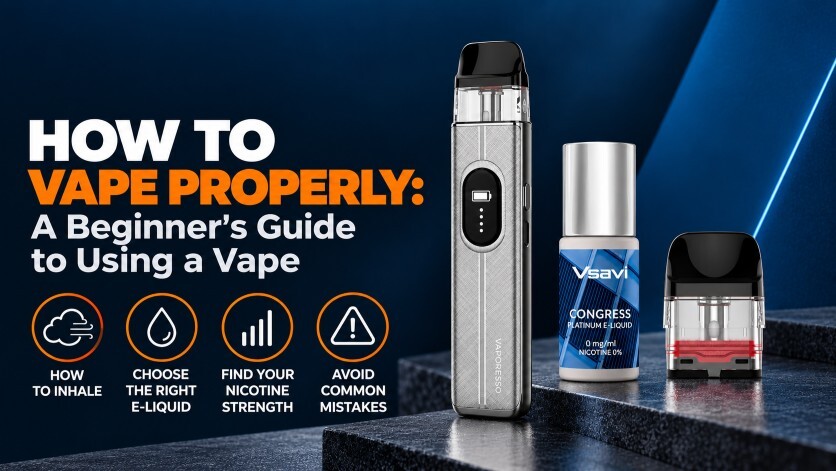
New to vaping, or using a vape for the first time? This guide explains how to vape properly: how to inhale, how to choose between mouth-to-lung (MTL) and direct-to-lung (DTL) vaping, how to avoid coughing, and how to get a smoother, more satisfying vape from your first device.
By Joe Delaney; Director and Content Writer, V2 Cigs UK.
Originally Published: 14th August 2024.
Last updated: 6th October 2026.
General guidance, not a substitute for the safety instructions that came with your device.
Vaping products are for adult smokers and existing vapers only. Vaping is not risk-free. Not suitable for non-smokers or anyone under 18.
When you first start vaping, it can feel more complicated than it needs to. There are devices, pods, tanks, coils, e-liquids, nicotine strengths and different ways to inhale. But the basics are much simpler than they first appear.
If you are switching from cigarettes, the most important thing is not learning tricks or chasing big clouds. It is learning how to vape in a way that feels comfortable, gives enough nicotine satisfaction and helps you avoid going back to smoking.
Nicotine vaping is described by the NHS as less harmful than smoking and one of the most effective tools for quitting smoking, although it is not completely risk-free and is not recommended for children or people who do not smoke.
Joe’s Advice
Most beginners do not need a powerful vape. They need the right nicotine strength, a simple device and a slow, steady inhale. Get those three things right and vaping becomes much easier.
In This Guide
- Quick answer: how do you vape properly?
- How vaping works
- Mouth-to-Lung vaping
- Direct-to-Lung vaping
- Restricted Direct Lung vaping
- How to use a vape for the first time
- Why beginners cough
- Choosing nicotine strength
- What does Vaping Cost?
- How to vape safely
- Common beginner mistakes
- Vaping Etiquette
- Beginner vaping FAQs
Quick answer: how do you vape properly?
To vape properly, place the mouthpiece between your lips, take a slow and steady draw, hold the vapour briefly in your mouth if using a Mouth-to-Lung device, then inhale gently and breathe out. Do not drag sharply as you would with a cigarette. Most beginner vapes work best with a relaxed draw lasting around two to four seconds.
For most smokers switching to vaping, Mouth-to-Lung vaping is the best place to start because it feels closest to smoking a cigarette.
If you're still weighing up which specific device suits you, our buyer's guide to which vape you should buy walks through the full decision in more depth.
How vaping works
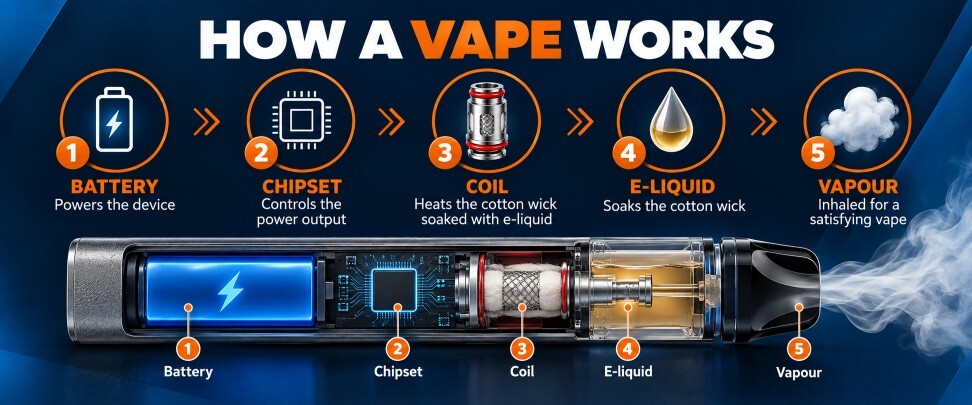
A vape device heats e-liquid into vapour. The e-liquid usually contains propylene glycol (PG), vegetable glycerine (VG), flavourings and, if selected, nicotine. The coil inside the pod or tank heats up when the device is activated, turning the liquid into vapour for you to inhale.
Unlike a cigarette, a vape does not burn tobacco. That is why the experience feels different. You are not inhaling smoke created by combustion. You are inhaling vapour produced by heating e-liquid.
That difference matters, especially for adult smokers. The aim for most beginners is not to copy every part of smoking perfectly. It is to replace cigarettes with a less harmful alternative that still satisfies nicotine cravings.
Mouth-to-Lung vaping
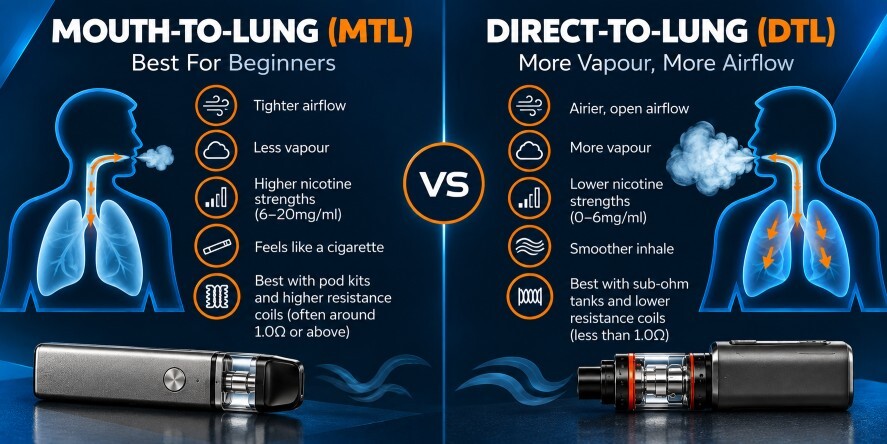
Mouth-to-Lung, often shortened to MTL, is the vaping style most beginners should try first.
With MTL vaping, you draw vapour into your mouth first, then inhale it into your lungs. This is similar to the way many people smoke a cigarette, which is why it feels familiar for new vapers.
How to Mouth-to-Lung Vape
- Place the mouthpiece between your lips.
- Take a slow, steady draw into your mouth.
- Hold the vapour briefly.
- Inhale gently into your lungs.
- Breathe out normally.
MTL vaping usually produces less vapour than larger cloud devices, but it is often more satisfying for smokers because it works well with higher nicotine strengths.
MTL Vaping Usually Works Best With:
- Pod kits
- Vape pens
- Starter kits
- Higher-resistance coils, often around 1.0 ohm or above
- 50/50 e-liquids
- Nicotine salts
- A tighter, cigarette-style draw
Joe’s Advice
If you are coming from cigarettes and your first vape feels too airy, look for a tighter Mouth-to-Lung device. A tighter draw is often the difference between a vape that feels natural and one that never quite satisfies.
Direct-to-Lung vaping
Direct-to-Lung, often shortened to DTL, is a style where you inhale vapour straight into the lungs rather than holding it in the mouth first.
It feels more like taking a deep breath than smoking a cigarette. DTL vaping usually creates larger clouds, uses more e-liquid and works best with lower nicotine strengths.
How to Direct-to-Lung Vape
- Open the airflow if your device allows it.
- Place the mouthpiece between your lips.
- Take a longer, smoother inhale directly into your lungs.
- Breathe out the vapour.
DTL vaping is not usually the best first step for heavy smokers because high nicotine strengths can feel too harsh when inhaled in large amounts of vapour. It is more commonly used by experienced vapers who prefer bigger clouds and lower nicotine.
DTL Vaping Usually Works Best With:
- Sub-ohm vape kits
- Lower-resistance coils below 1.0 ohm
- Lower nicotine strengths
- Higher-VG e-liquids
- More open airflow
- Higher power settings
Restricted Direct Lung vaping
Restricted Direct Lung, or RDL, sits between Mouth-to-Lung and Direct-to-Lung vaping.
You inhale directly into the lungs, but the airflow is tighter than a full DTL vape. This gives more vapour than traditional MTL vaping while still feeling controlled and flavourful.
RDL can be a good option for vapers who have moved beyond their first starter kit and want a little more vapour without going fully into large-cloud vaping.
How to use a vape for the first time
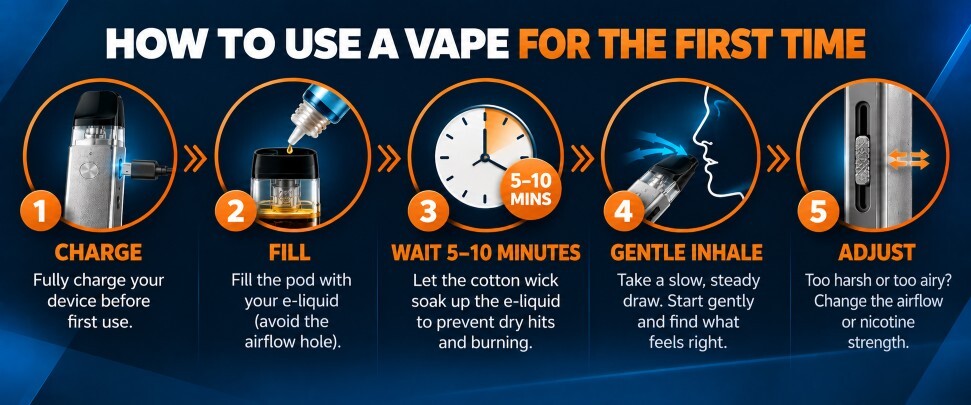
Your first vape should feel simple. If the device feels confusing, there is a good chance it is more advanced than you need at this stage.
Step 1: Charge the Device
Before using your vape, make sure the battery is charged. Use the cable supplied with the device where possible, and avoid leaving it charging unattended for long periods.
Step 2: Fill the Pod or Tank
If you are using a refillable vape, open the fill port and add e-liquid carefully. Do not overfill the pod or tank, and close the seal properly afterwards.
Step 3: Let the Coil Soak
If the pod or coil is new, leave it for around five to ten minutes after filling. This gives the cotton inside the coil time to absorb e-liquid. Vaping too soon can burn the coil before you have properly started. Our guide to vape coils explains how coils work and when to change them.
Step 4: Start with Gentle Puffs
Take slow, gentle puffs rather than sharp drags. A vape does not need to be pulled hard. Drawing too sharply can cause coughing for the user, or the device to start gurgling or spitting.
Step 5: Adjust if Needed
If your device has adjustable airflow, begin with a tighter setting if you are used to smoking. If the vapour feels too restricted, open the airflow slightly until it feels comfortable.
Beginner Setup Checklist
- Battery charged
- Pod or tank filled correctly
- Coil allowed to soak
- Correct e-liquid for your device
- Nicotine strength suitable for your smoking habits
- Slow, steady draw
Why beginners cough
Coughing is common when people first switch from smoking to vaping. It does not always mean vaping is wrong for you. Often, it simply means your technique or setup needs adjusting.
Common Reasons Beginners Cough
- You are inhaling too sharply.
- Your nicotine strength may be too high.
- Your device may be too powerful for a beginner.
- You may be using the wrong type of e-liquid.
- Your throat is adjusting from smoke to vapour.
How to Reduce Coughing
- Take slower, gentler puffs.
- Try a Mouth-to-Lung device if you are using a very airy vape.
- Check your nicotine strength.
- Use a 50/50 e-liquid in beginner pod kits.
- Drink water regularly.
If coughing continues or you have health concerns, speak to a healthcare professional.
Choosing nicotine strength
Nicotine strength is one of the biggest reasons vaping either works or does not work for a new user.
If your nicotine strength is too low, you may vape constantly and still want a cigarette. If it is too high, the vape may feel harsh or make you feel light-headed.
This is only a guide. The right strength depends on how much you smoked, how often you vape and how satisfying your device feels.
Joe’s Advice
Don't be too quick to choose the lowest nicotine strength. I see many beginners struggle because they are trying to replace cigarettes with too little nicotine. You can reduce later. First, focus on staying away from smoking.
What Type of E-Liquid Should Beginners Use?
Most beginner pod kits and vape pens work best with 50/50 e-liquid. This means the liquid has a balanced mix of PG and VG, giving a good combination of flavour, throat hit and vapour production.
High-VG e-liquids are thicker and are usually designed for more powerful sub-ohm devices. Using them in small beginner pods can cause poor wicking, weak flavour or burnt coils.
Simple Beginner Rule
- For pod kits and vape pens: choose 50/50 e-liquid or nicotine salts.
- For sub-ohm kits: choose lower nicotine, higher-VG e-liquid.
- If unsure: check the device instructions or ask our helpful Support Team before buying.
What Does Vaping Cost?
Cost is one of the most common questions from anyone thinking about switching, and it's worth understanding before you buy.
There are two parts to it: the upfront cost of a device, and the ongoing cost of e-liquid and replacement parts. A simple starter kit or pod system is generally the cheapest way in, often costing less than a couple of weeks' worth of cigarettes. E-liquid then becomes your main ongoing cost, alongside occasional replacement coils if your device uses them.
Joe's Advice
Don't judge the cost of vaping by the price of the device alone. A cheaper starter kit with slightly higher running costs can work out more expensive over a year than a slightly pricier kit that sips e-liquid efficiently. If cost matters to you, ask our team what a specific kit typically costs to run day to day, not just to buy.
Most beginners find that, once they've settled on a device and nicotine strength that actually satisfies them, ongoing costs settle into a predictable weekly or monthly pattern, similar to any other regular purchase. If you're chopping and changing between devices or e-liquids while you find what works, expect costs to be a little less predictable at first.
How to vape safely
Vaping safely is mostly about using the right product in the right way and looking after your device properly.
Basic Vape Safety Tips
- Only use vaping products if you are an adult smoker or already vape.
- Keep e-liquids and devices away from children and pets.
- Do not swallow e-liquid.
- Use the correct charger and cable for your device.
- Do not use damaged batteries or damaged devices.
- Do not leave your vape charging overnight or unattended for long periods.
- Keep your pod or tank topped up to avoid dry hits.
- Replace burnt coils rather than continuing to use them.
- Use the right e-liquid for your device.
- Recycle batteries and devices responsibly.
Important
Vaping is not for children, non-smokers or anyone who does not already use nicotine. If you do not smoke, you should not start vaping.
Common beginner mistakes
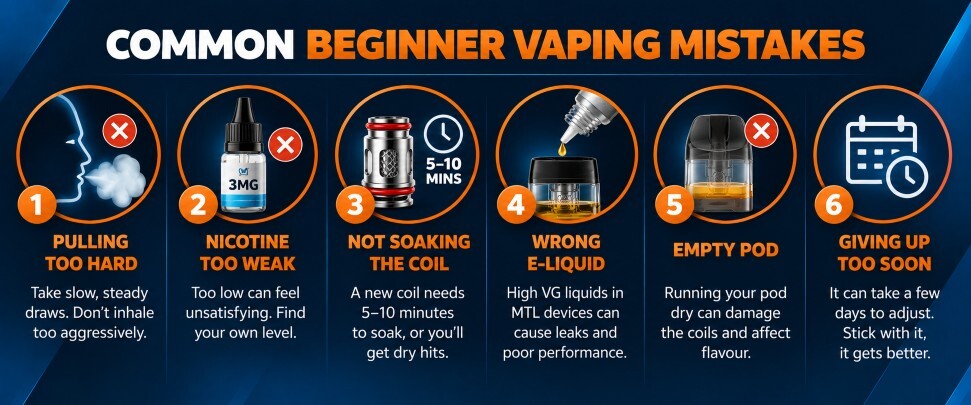 1. Taking Sharp Cigarette-Style Drags
A vape works best with a slower inhale. Pulling too hard can make the vape feel harsh and may cause flooding or spitting.
2. Choosing Nicotine That Is Too Weak
If your vape does not satisfy cravings, your nicotine strength may be too low. This is one of the most common reasons beginners return to cigarettes.
3. Not Letting a New Coil Soak
Always allow a new coil or pod to absorb e-liquid before using it. This helps prevent burnt hits.
4. Using the Wrong E-Liquid
Small pod kits usually need thinner 50/50 liquids. Thick high-VG liquids are better suited to more powerful devices.
5. Letting the Pod Run Dry
Vaping with too little e-liquid can burn the coil. Top up before the pod is empty.
6. Giving Up Too Quickly
Vaping may feel different for the first few days. Give yourself time to adjust before deciding it is not working.
How Often Should You Vape?
There is no fixed number of puffs that suits everyone. Unlike a cigarette, a vape does not have a natural end point, so most people take a few puffs when they feel a craving and then put the device down.
If you find yourself vaping constantly without feeling satisfied, check your nicotine strength and device type. You may not be getting enough nicotine from your current setup.
If you feel dizzy, nauseous or light-headed, stop vaping for a while. Those can be signs you have had more nicotine than you need.
Should Beginners Try Vape Tricks?
Vape tricks such as ghost vaping or blowing rings are not necessary when you are switching from smoking. They are also much easier with larger vapour devices, which are not always suitable for beginners using higher nicotine strengths.
If your goal is to stop smoking, focus first on learning a comfortable inhale, choosing the right nicotine strength and keeping your device working properly. Tricks can wait.
Vaping Etiquette
There's no UK law dictating where you can and can't vape, but most venues that ban smoking apply the same rule to vaping, even without being legally required to. Public transport is a common example: most networks treat vaping the same as smoking, so it's worth checking before you assume it's fine.
Beyond the legal side, a bit of common courtesy goes a long way, especially as a new vaper still finding your feet.
A Few Good Habits
- Ask before vaping in someone else's home or car, the same as you would with smoking.
- Be mindful in crowded spaces. Not everyone wants a cloud of vapour drifting their way, even if it doesn't bother you.
- If someone asks a genuine question about vaping, a short, honest answer helps more than an argument. Not everyone who's curious is looking for a debate.
- Respect that other vapers might prefer a completely different setup to yours. What works for you won't necessarily work for someone else, and that's fine.
None of this is complicated. It mostly comes down to the same basic consideration you'd apply anywhere else, adjusted slightly for a habit that's still newer and less universally understood than smoking.
How to Know If Your Vape Is Working for You
A beginner vape is doing its job if it helps reduce or replace cigarettes, feels comfortable to use and satisfies cravings without feeling too harsh.
Good signs include:
- You are smoking fewer cigarettes.
- Cravings are easier to manage.
- The device feels simple to use.
- You enjoy the flavour.
- You are not coughing after every puff.
- You feel confident carrying and using the vape during the day.
If your vape is not doing these things, do not assume vaping is the problem. You may simply need a different nicotine strength, a tighter draw, another flavour or a more suitable beginner kit.
Joe’s Final Advice
When someone tells me vaping did not work for them, I always ask what device and nicotine strength they used. More often than not, the problem was not vaping itself. It was the wrong setup. Start simple, use enough nicotine to control cravings and give yourself time to adjust.
Beginner vaping FAQs
What is the best way to inhale a vape?
Most beginners should use a Mouth-to-Lung inhale. Draw vapour into your mouth first, then inhale gently into your lungs and breathe out. This feels closest to smoking.
Do you inhale vape into your lungs?
Most adult vapers do inhale vapour into the lungs, either after holding it briefly in the mouth or directly depending on the device. Beginners usually find Mouth-to-Lung vaping easier.
Why does vaping make me cough?
You may be inhaling too sharply, using a nicotine strength that is too high, using the wrong device style or adjusting from smoke to vapour. Slower puffs and a suitable beginner kit usually help.
Is Mouth-to-Lung or Direct-to-Lung better for beginners?
Mouth-to-Lung is usually better for beginners, especially smokers switching from cigarettes. It provides a tighter draw and works well with higher nicotine strengths.
How long should I puff on a vape?
A slow draw of around two to four seconds is usually enough for most beginner devices. Avoid very sharp or forceful puffs.
Can I vape too much?
Yes. If you feel dizzy, sick or light-headed, stop vaping for a while. You may need a lower nicotine strength or fewer puffs.
What nicotine strength should I start with?
Light smokers may prefer 5mg to 10mg, while regular or heavy smokers may need 10mg to 20mg nicotine salt. The right choice depends on your previous smoking habits and how satisfied you feel.
What should I do if my vape tastes burnt?
Stop using it and check the e-liquid level. If the coil tastes burnt, replace it. Once coil cotton has burnt, the flavour will not usually recover.
Should I start with a pod kit or vape mod?
Most beginners should start with a pod kit or simple vape pen. Vape mods are usually better for experienced vapers who want more power and customisation.
Is vaping safe?
Vaping is not risk-free, but for adult smokers it is less harmful than smoking according to the NHS. It is not recommended for children, non-smokers or people who do not already use nicotine.
Still have questions? Our Common Vaping Questions FAQ Hub covers more of what people ask us most.
Need Help Choosing Your First Vape?
If you are switching from smoking and are unsure where to start, our team can help you choose a beginner-friendly device, suitable nicotine strength and e-liquid that matches your needs.
Contact V2 UK Customer Services or browse our starter vape kits.
Reviewed for: adult smokers and existing vapers. Vaping products contain nicotine where stated and are intended for adults aged 18+ only.
Useful Guides Related to This Topic
- Best Vape Kits for Beginners: Affordable, Reliable & Easy to Use
- Buyer’s Guide: Which Vape Should You Buy?
- What’s the Difference Between Vape Mods and Pod Kits?
- What Nicotine Strength Do I Need? Calculate Your Perfect Vape Strength
- Why Does Vaping Make Me Cough?
- Vape Coils Explained: Types, Ohms and How Long They Last
- Why Does My Vape Taste Burnt?
- How to Clean and Maintain Your Vape
- Common Vaping Questions: The FAQ Hub
About the Author
 Joe Delaney is part of the team at V2 Cigs UK. V2 was founded in 2012 to offer adult smokers a genuine alternative to cigarettes, and more than a decade on, what has kept the company going is the trust of its customers - built on a simple commitment to doing right by them. Its cigalike kit has been the familiar starting point for many adult smokers switching to vaping over those years, and that track record is something the team is proud of.
Joe has hands-on, day-to-day experience of the products and of the people switching from cigarettes. The health, safety and regulatory points in this article are drawn from UK authorities - the NHS and the MHRA - and from published research, and linked throughout. This article is general information and is not medical advice.
Sources
- MHRA / GOV.UK - E-cigarette regulations for consumer products.
- NHS Better Health - Vaping to quit smoking.
- Office for Health Improvement & Disparities - Evidence update on vaping in England.
- Manufacturer instructions and in-house product testing where applicable.
Vaping products are for adult smokers and existing vapers only. Vaping is not risk-free. Not suitable for non-smokers or anyone under 18.
Last updated: 6th October 2026.